Embracing AI to Achieve Remarkable Success with Guy Kawasaki [Sidecar Sync Episode 38]
Discover how Guy Kawasaki embraces AI to achieve remarkable success in the Sidecar Sync podcast episode. Gain valuable insights on AI tools,...
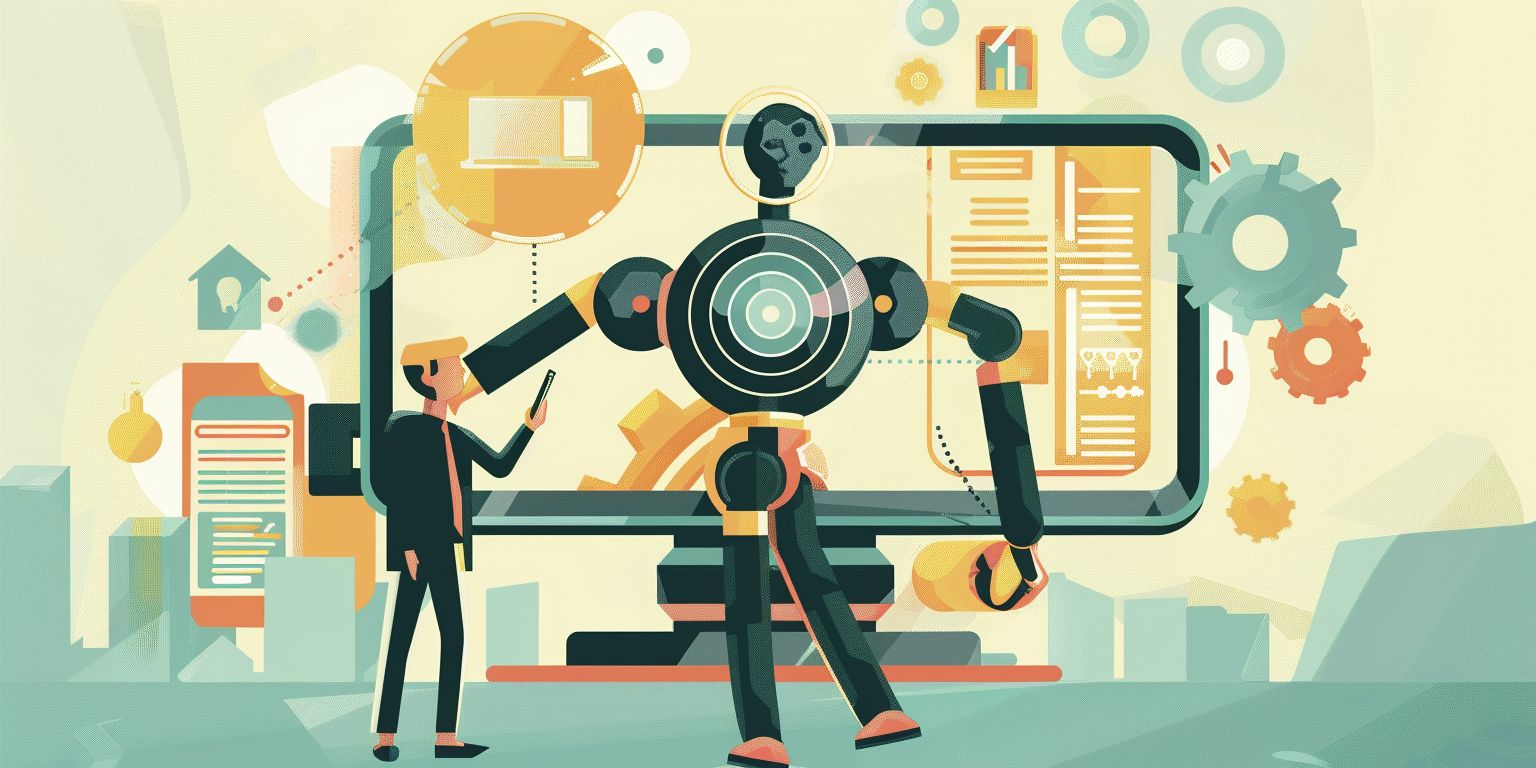
One thing I've been thinking about a lot lately: who actually owns growth at your organization?
Not marketing. Not sales. Not membership. Growth itself, the thing that happens in the seams between all of those functions, the moment a stranger becomes a prospect, a prospect becomes a member, and a member becomes an advocate. Most organizations still don't have anyone whose job is standing in those seams. I think that's about to change, and I think the role that fills the gap deserves a name: the AI Growth Operator.
I started thinking about this in earnest after listening to Greg Isenberg talk through a related idea on his show, The Startup Ideas Podcast, (one of my favorites to really help spur creative thinking!). Isenberg describes what he calls the Marketing Engineer, which he frames as the marketing world's version of the forward-deployed engineer, a role that came out of companies like Palantir. A forward-deployed engineer doesn't just build software and hand it off; they embed with a team and build the actual workflows that team runs on. Isenberg's Marketing Engineer does something similar for growth: instead of embedding with your team, they build the AI agents that go find your customers, your audience, your members, for you.
Everything he said resonated very deeply with me. I've spent the better part of the last month interviewing dozens of association executives on the challenges they face, and there is something even more all-encompassing taking shape. The idea is bigger than marketing alone. It's every growth function at once, which is why I've landed on Growth Operator rather than Marketing Engineer as the name for it. It was genuinely energizing to hear a concept I'd been talking through with association professionals for weeks show up, fully formed, from someone I already consider one of the sharpest voices in growth media.
I've spent the better part of fifteen years standing in exactly those seams, and lately, they look a little different. So what changed, and why does this role need a name now instead of five years ago? Two ideas, both of which are showing up everywhere I look right now, explain it.
The first comes from HubSpot's new thesis on "Loop Marketing". The argument, backed by what HubSpot is seeing across its own customer base, is that most buyers now start their research inside an AI chatbot rather than a search engine. They don't scroll page one of Google anymore. They ask, and the model answers. That changes the job completely. It's no longer "rank for the question." It's "be the source the model cites when it answers it," which is the entire premise behind answer engine optimization (AEO), a discipline that didn't meaningfully exist three years ago and now sits at the center of how organizations get found.
The second idea is about attention, not discovery. B2B is going through the same shift B2C went through years ago, moving away from brand-owned channels and toward creator channels. Rand Fishkin has been one of the clearest voices tracking this, pointing out that audiences trust individual creators and operators with a real point of view more than they trust polished brand accounts. If that's true, and I think it is, then the operator who can build an actual voice matters just as much as the operator who can build a pipeline. (And they also need to leverage new tech to amplify that voice, of course, and make sure it gets noticed by the right people, but I digress.)
Sit with both of those ideas for a second, because they point at the same conclusion from two different directions. The playbook every growth professional learned over the last decade, the one built around ranking, funnels, and brand channels, is being rewritten in real time. Not eventually. Now.
Put those two shifts next to each other and you get a fuller picture of what the AI Growth Operator actually does day to day. They're not just running paid campaigns or writing the next newsletter. They're making sure the organization shows up correctly when an AI model answers a question about it, which is a technical and content problem at once. And they're building a real, human voice for the organization or its leaders, one that can hold attention on a creator channel the way a brand account never could. They are also creating an engagement-system foundation that is set up for full AI optimization. That's a wider job description than "marketer" or "salesperson" has ever covered, and it's exactly why the role needs its own name and its own seat at the table, not a line item buried inside someone else's job.
And if that sounds like a lot of work. It sure is. Which is why, once again, we have to leverage emerging technologies to agentify the tedious pieces of what sales and marketing pros do, so they can spend time on the strategic work that gets an organization to stand out and, even more importantly, so they can spend time talking to members.
This tension, the changing of the playbook, the rewiring of our sales and marketing brains, keeps generating energy, because everyone in the room already senses the ground shifting under their old business as usual. They just haven't had a name for the person who should be catching it.
Call it whatever fits your organization: AI Growth Operator, growth marketer, revenue operator, or just the person who finally gets it. The title matters less than the fact that someone needs to own it.
So I'll ask you the same question I've been asking association leaders all month: who is playing that role at your organization right now? And if the honest answer is no one, that's worth fixing before the rest of your industry figures it out first.
About the Author
Erica Salm Rench helps organizations cut through the noise and grow using AI-powered marketing and sales. She's delivered 300+ talks on marketing AI, served seven years as COO of rasa.io, and later served as CMO of Sidecar.ai. She was honored with the 2026 AWTC Technology Leadership Award for her leadership and impact in the association technology community. Today she runs her own AI Growth Agency, helping executives build visibility and modernize their marketing and sales operations with AI. Erica is a proud Sidecar Ambassador, promoting and living out Sidecar's mission to educate one million association professionals on AI by 2030.
Discover how Guy Kawasaki embraces AI to achieve remarkable success in the Sidecar Sync podcast episode. Gain valuable insights on AI tools,...
Explore the exponential growth of AI, from historical context to future predictions, in a deep dive on Sidecar Sync Episode 39. Discover insights on...

There's a more fundamental measure of leadership success that deserves our attention: the growth of our people.