The conversation around AI skills has shifted. What was a "nice to have" a few years ago has become a baseline expectation. According to Microsoft and LinkedIn's Work Trend Index, which surveyed 31,000 people across 31 countries, 66% of leaders say they wouldn't hire someone without AI skills. Even more striking: 71% say they'd rather hire a less experienced candidate with AI skills than a more experienced candidate without them.
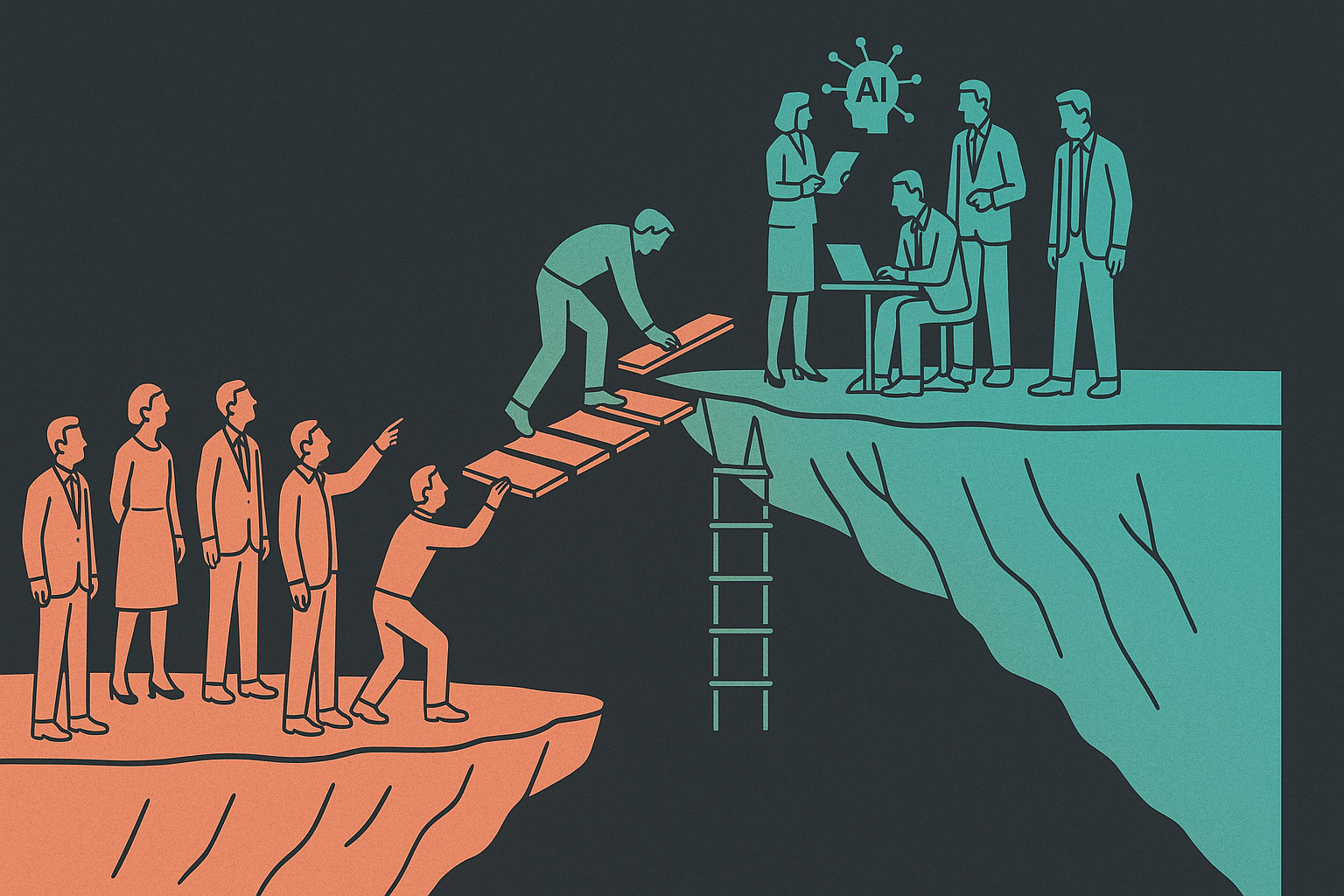
These numbers should get your attention. But here's the problem: while leaders are demanding AI skills from candidates, most organizations aren't doing much to develop those skills internally. The same report found that only 39% of employees have received AI training from their company, and just 25% of companies plan to offer it this year.
There's a significant gap between what leaders expect and what they're providing. For association leaders, closing that gap has become an obligation, not an option.
What AI Literacy Actually Looks Like
Before talking about how to build AI skills, it's worth clarifying what we mean by AI literacy. There's a common misconception that being AI literate means understanding what a large language model is, knowing how neural networks function, or being able to explain the difference between machine learning and deep learning.
That's not it.
AI literacy means daily use. If you're not actively using AI tools in your regular work, you're not literate in AI. It doesn't matter how many courses you've completed or how well you can explain the technology conceptually. The theoretical knowledge becomes outdated almost immediately if you're not practicing.
Here's a simple test: Can you give specific examples of how you used AI in the last week? Not hypothetical use cases. Actual tasks you completed with AI assistance. If you struggle to answer that question, there's work to do.
This definition matters because it shifts the goal from "learn about AI" to "use AI." Those are very different things. One can be checked off after a single workshop. The other requires ongoing engagement with the tools themselves.
The Problem with Encouragement
Many association leaders tell their teams that AI learning is important. They share articles, mention it in meetings, and generally express support for professional development in this area. They encourage.
And then nothing much happens.
The issue with encouragement is that it puts the entire burden on the individual. Without structure, without expectations, without accountability, most people won't prioritize something new when they're already busy with existing responsibilities. AI learning becomes something they'll get to eventually, which usually means never.
Some leaders frame this as respecting autonomy. They say they can't force people to learn. But this framing misses something important: organizations require training for other things all the time. Compliance training, safety protocols, onboarding processes, new software rollouts. When something matters to the organization, it becomes a requirement, not a suggestion.
AI literacy has reached that threshold. Treating it as optional while simultaneously expecting employees to have these skills creates an unfair dynamic. You're holding people accountable for capabilities you haven't helped them develop.
The approach that works combines clear expectations with genuine support. Yes, you can offer incentives and make learning engaging. You can celebrate achievements and create friendly competition. But underneath that, there needs to be an unambiguous message: developing AI skills is part of your job now.
The Leadership Obligation
Here's the harder truth: failing to provide AI training isn't a neutral choice. It's a choice that actively harms your team's future prospects.
The job market is already shifting. Leaders across industries are prioritizing AI skills in hiring decisions. Employees who don't develop these capabilities will find themselves at a growing disadvantage, whether they're seeking new roles externally or competing for advancement internally.
If you're not preparing your people for where work is heading, you're not leading them toward a future. You're leading them toward obsolescence. That might sound harsh, but it's the reality of the current moment.
This isn't about being demanding for its own sake. It's about caring enough about your team to ensure they're equipped for what's coming. The leader who requires AI training and provides the resources to complete it is doing more for their employees than the leader who leaves it as a vague aspiration.
The good news is that getting started costs nothing. Free AI training resources are everywhere. Microsoft, Google, Amazon, Coursera, LinkedIn Learning, and dozens of other platforms offer quality content at no charge (including Sidecar, of course). The barrier isn't budget. It's prioritization.
The Practical Path Forward
Abstract commitments to AI learning don't translate into actual skill development. What works is specific, consistent practice.
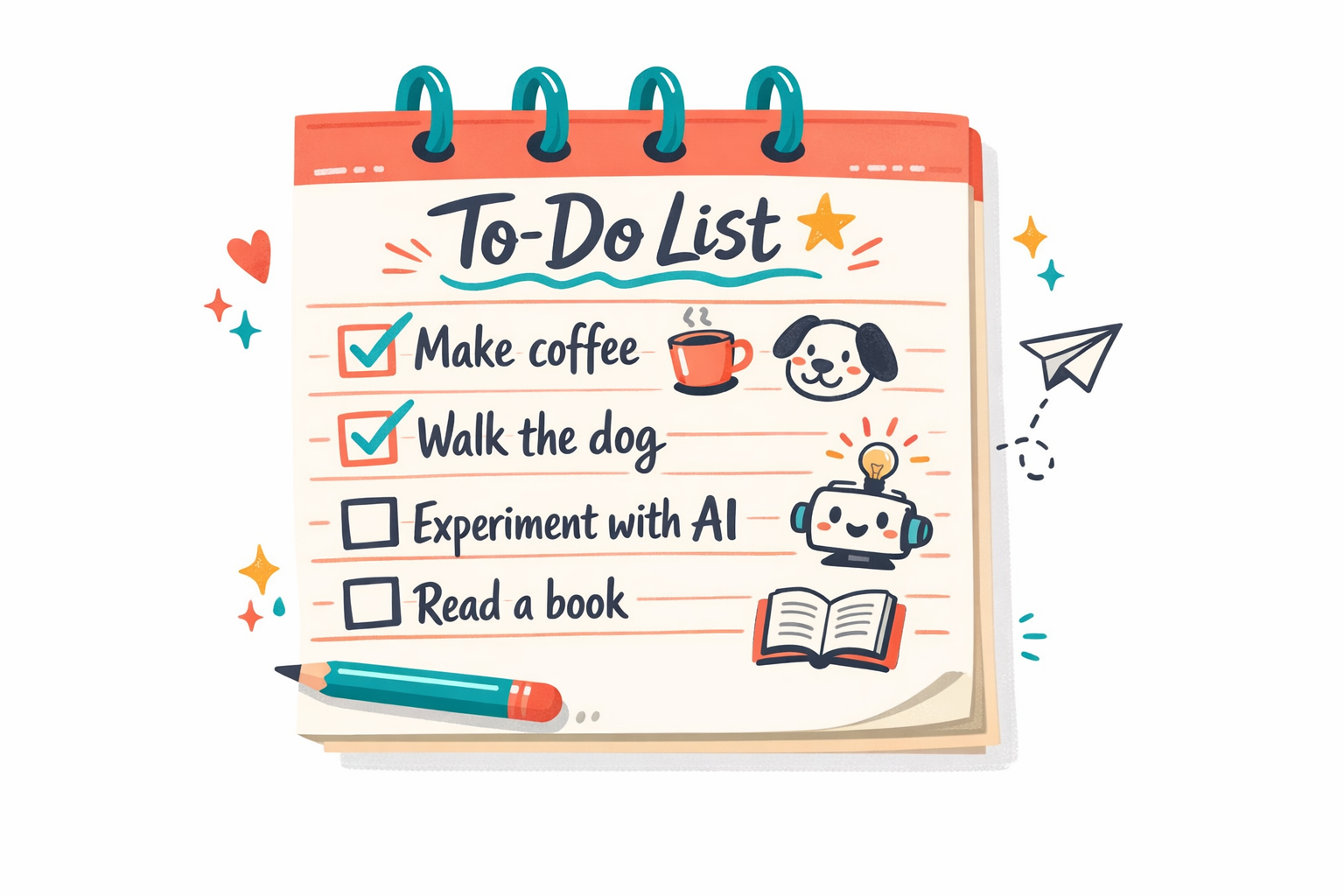
The most effective approach is simple: block 15 minutes on your calendar, every day, for AI learning. Not a course you take once and forget. A daily practice that becomes part of your routine.
During those 15 minutes, you might use a new AI tool. Read about a recent development. Experiment with a prompt for a task you're working on. Watch a short tutorial. The specific activity matters less than the consistency.
This works because small daily investments compound over time. Someone who spends 15 minutes a day learning AI will accumulate over 90 hours of practice by the end of the year. That's enough to develop genuine proficiency. More importantly, daily engagement keeps you current as the technology evolves, which it does constantly.
Leaders should model this behavior, not just mandate it. When your team sees you actively learning and experimenting with AI, the message is far more powerful than any memo or policy. You're demonstrating that this matters enough to prioritize in your own schedule.
If you commit to this practice for all of 2026, you'll end the year in a fundamentally different place than you started. The same is true for every member of your team.
The Association Opportunity
Everything discussed so far applies to internal teams. But for associations, there's a second dimension to this conversation: the opportunity to provide AI education to members.
Generic AI training is widely available. Anyone can access free courses from major tech companies and learning platforms. But generic training has limitations. It teaches broad concepts without connecting them to specific professional contexts. A lawyer learning AI alongside a graphic designer and a supply chain manager will get foundational knowledge, but not much guidance on how AI applies to their particular work.
This is where associations have a significant advantage. You understand your profession or industry deeply. You know the workflows, the challenges, the terminology, the regulatory environment. You can provide AI training that's contextualized for your members' actual work.
Imagine an AI course for healthcare administrators that uses examples from hospital operations, addresses HIPAA considerations, and demonstrates tools relevant to patient scheduling and records management. Or a program for engineers that focuses on AI applications in design review, simulation analysis, and project documentation. That kind of specificity makes learning stick in ways that generic content can't match.
Associations are the professional bodies that members look to for continuing education. They trust you to help them stay current and competitive in their fields. AI education fits naturally into that relationship. And given how urgently members need these skills, providing them is both a service and an opportunity to demonstrate ongoing relevance.
The Cost of Waiting
The gap between AI-literate professionals and everyone else is widening. With each passing month, those who are actively building skills pull further ahead. They're more productive, more adaptable, and more valuable to employers.
For individuals, waiting means falling behind. For organizations, waiting means watching competitors gain advantages that become harder to match over time. For associations, waiting means missing the window to establish yourself as the go-to resource for AI education in your field.
AI literacy has crossed the threshold from forward-thinking to fundamental. Leaders who recognize this and act on it will build more capable teams, deliver more value to members, and position their organizations for what's ahead.
The simplest starting point remains the same: 15 minutes a day, starting tomorrow.
January 9, 2026