When people talk about AI risk, they tend to focus on dramatic scenarios. Mass unemployment. Superintelligent systems escaping human control. Robots replacing workers on factory floors and in office parks.
Those concerns aren't unfounded. But they may not be the most pressing ones.
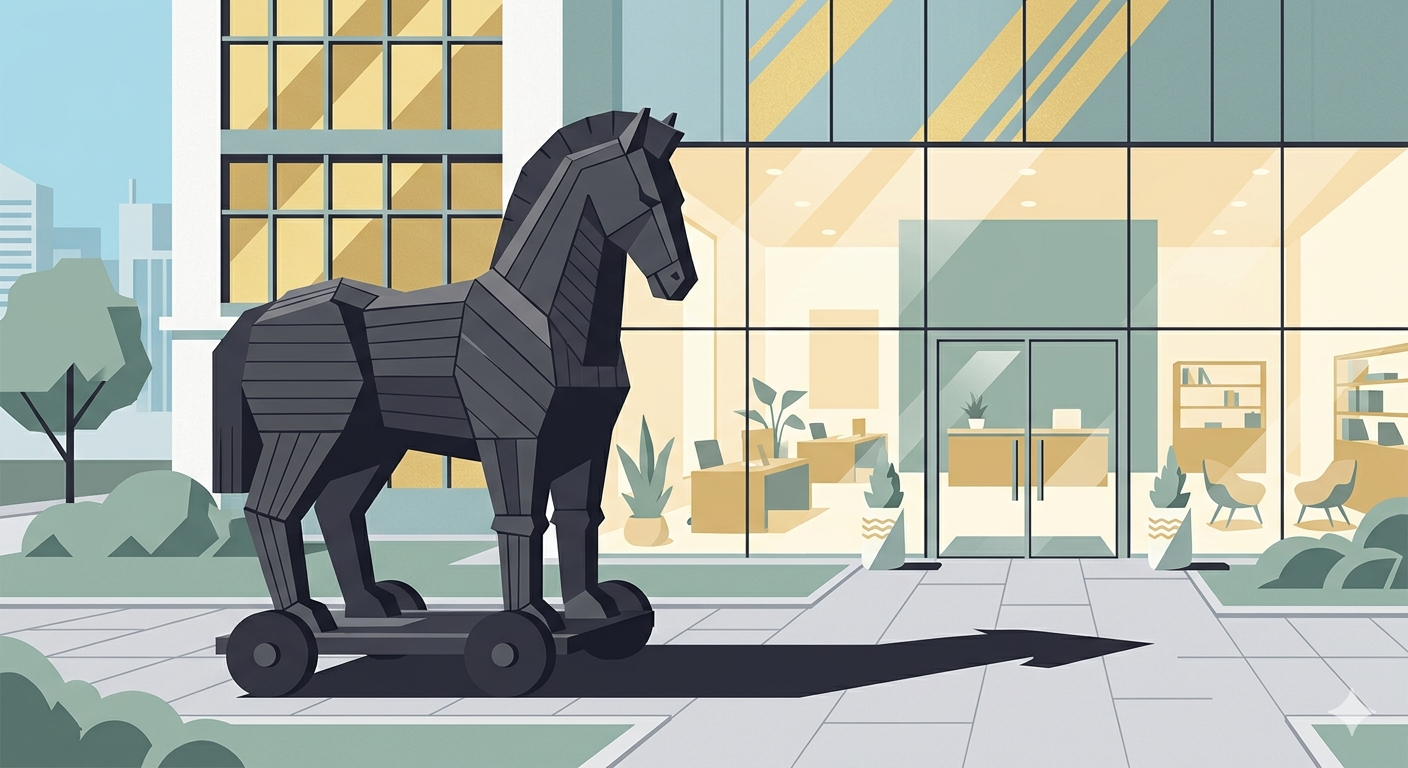
The more immediate threat is quieter, harder to photograph, and already underway: the erosion of trust.
In a recent conversation on the Sidecar Sync Podcast, Bruce Reed—head of AI at Common Sense Media and former deputy chief of staff in the Biden White House—named trust as his primary concern. Societies run on trust. Governments, businesses, families, professional communities—all of them depend on a baseline assumption that the people and information we encounter are what they claim to be. When that assumption weakens, everything gets harder.
AI is blowing through the stop signs on trust. And for associations built on credibility and member confidence, this shift demands attention.
Truth Was Already Fragile
It's worth acknowledging that trust was under pressure long before AI entered the picture.
Misinformation has always existed. Propaganda, rumor, spin—these are ancient tools. The internet accelerated their spread, and social media created ecosystems where sensational falsehoods could travel faster than careful corrections.
AI doesn't create distrust. It amplifies it.
The technology makes deception cheaper, faster, and more convincing. Generating a fake video that once required a studio and technical expertise now requires a laptop and a few prompts. Cloning someone's voice takes seconds. Creating a persuasive fake email, website, or document is trivially easy for anyone motivated to do so.
The volume and sophistication of synthetic content is about to increase dramatically. Tools like Sora make it possible to produce deceptive video with relatively little effort. What was once detectable as "off" will soon be (or perhaps already is) indistinguishable from authentic footage.
This changes the information environment for everyone—including the members your association serves.
The Scam Economy
One immediate consequence is an explosion in AI-powered scams.
Voice cloning allows bad actors to impersonate family members, colleagues, or authority figures with startling accuracy. An elderly parent receives a call from someone who sounds exactly like their grandchild, asking for emergency money. A finance employee gets a voicemail from what sounds like the CEO, requesting an urgent wire transfer. A member gets an email from what appears to be the association, asking them to update their payment information.
The traditional signals we use to verify authenticity—voice, appearance, writing style—are becoming unreliable. Families are adopting safe words to confirm they're actually speaking with loved ones. Organizations are implementing callback protocols to verify requests that arrive through digital channels.
We're entering a period where skepticism becomes a survival skill. That's exhausting for individuals and corrosive for communities that depend on good-faith interaction.
What This Means for Professional Communities
Associations don't operate in a vacuum. They exist within an environment where trust is eroding broadly—and that affects everything they do.
Members are becoming more skeptical of institutions generally. When people are constantly on guard against scams, misinformation, and synthetic content, that vigilance doesn't switch off when they interact with organizations that are actually trustworthy. Associations may find they have to work harder to maintain credibility they used to receive by default. The benefit of the doubt is shrinking.
The professions associations serve face their own trust challenges. Doctors, lawyers, financial advisors, engineers—these fields depend on public confidence in professional expertise. When AI makes it easier to generate plausible-sounding medical advice, legal analysis, or technical guidance, the value of actual credentials gets muddier. Members are navigating a world where their expertise is both more questioned and more essential. That tension is an association concern.
The knowledge landscape is getting polluted. Every profession has a body of knowledge: research, standards, best practices, emerging developments. That information environment is now filling with AI-generated content of varying quality—some useful, some misleading, some completely fabricated. Practitioners have to spend more energy sorting signal from noise. Associations that have traditionally curated and validated professional knowledge have an opportunity here, but also a higher bar to clear.
Member-to-member trust still matters. One of the core functions associations provide is connecting practitioners with peers. That value depends on confidence that the people in your network, your online community, your conference sessions are who they claim to be. As AI-generated personas become more sophisticated, the authenticity of professional community becomes something that can't be taken for granted.
The Permanent Junior High
There's another dimension to the trust problem that affects members on a more personal level.
AI doesn't just enable external deception—it also powers the platforms that shape how people see themselves and their world. Social media algorithms, increasingly driven by AI, are remarkably good at identifying vulnerabilities and exploiting them. They know how to keep you scrolling, how to trigger emotional responses, how to serve content that confirms your fears or stokes your outrage.
Reed described the experience of AI-driven social media as being permanently in junior high and never getting to go home. The social anxiety, the comparison, the constant performance—it just goes on and on.
This affects mental health, certainly. But it also affects professional communities. Members who are exhausted, anxious, and distrustful of information are harder to engage. They're more likely to disengage from institutions generally, including associations. The erosion of trust in one domain bleeds into others.
What Associations Can Do
Many associations have spent decades building something that's becoming increasingly rare: trusted brands.
Members believe what you publish. They open your emails. They show up at your events expecting to meet real peers. They cite your standards and reference your research. That trust wasn't automatic—it was earned through years of consistent, credible work.
In a world where trust is eroding broadly, that's not just nice to have. It's a strategic asset. And it deserves to be treated like one.
Protect what you've built. The editorial standards, fact-checking, and institutional credibility that created your reputation are worth reinforcing, not cutting when budgets get tight. When your association publishes something, members should be confident it's accurate. That confidence is increasingly rare and increasingly valuable.
Be consistent and recognizable. Trust is built through repeated, reliable interactions. Consistent communication channels, recognizable formats, and clear institutional voice all make it easier for members to distinguish legitimate association content from noise. The more predictable you are in the right ways, the harder you are to impersonate.
Help members navigate the landscape. Many professionals haven't fully absorbed how much the information environment has changed. Associations can provide practical guidance on recognizing synthetic media, verifying sources, and protecting themselves from AI-powered scams. This is member service—and it reinforces your role as a trustworthy guide.
Verify your community spaces. If your association runs online forums, networking platforms, or member directories, consider how you confirm that participants are who they claim to be. The value of professional community depends on confidence that you're actually interacting with peers. That confidence is now something you have to actively maintain.
Be transparent about your own AI use. When your association uses AI—in content creation, member service, or operations—be open about it. Transparency builds trust. Discovering that an organization has been using AI without disclosure undermines it.
Use your policy voice. The conversation around synthetic media, deepfakes, and AI-generated content is still taking shape. Associations can bring their professional expertise to bear on questions like disclosure standards, watermarking requirements, and platform accountability. You already have a seat at policy tables. This issue belongs on the agenda.
An Uncomfortable Transition
We're in an awkward period. The technology that creates trust problems is advancing faster than the technology that might solve them. Watermarking, authentication, and verification tools exist, but they're not yet widespread or foolproof.
For now, the best defense is awareness, process, and institutional commitment to integrity.
That's not a satisfying answer. It would be nicer to have a technical fix, a policy solution, a product that makes the problem go away. Those may come eventually. In the meantime, navigating this environment requires old-fashioned virtues: skepticism, verification, and the discipline to prioritize accuracy over speed.
Trust but verify. It's not a new idea. But it's newly urgent.
What This Means for Your Association
AI's impact on trust isn't a future problem. It's a present one, accelerating rapidly.
But here's the thing: most associations aren't starting from zero. You've already built something valuable—a reputation, a track record, a relationship with members who believe you have their interests at heart. That foundation took years to establish. It can't be replicated quickly, and it can't be faked.
As trust erodes elsewhere, that credibility becomes more valuable, not less. The associations that recognize this—and treat their trusted brand as something worth investing in and protecting—will find themselves more essential to members than ever.
The ones that take it for granted may not realize what they had until it's gone.
In a world where everything can be faked, authentic institutions become irreplaceable. You're already one of them. Act like it.
February 4, 2026