1 min read
Argentina, ARD, & AI’s Environmental Footprint | [Sidecar Sync Episode 140]
Summary: In this episode of the Sidecar Sync, Amith Nagarajan and Mallory Mejias explore one of the most provocative ideas in AI yet: companies...
5 min read
Sidecar Team : Updated on June 30, 2026
Imagine hiring a brilliant assistant who speaks twenty languages and processes information at lightning speed, but they have no idea where the filing cabinets are, do not know the phone numbers of your vendors, and cannot find the supply closet. Without a map of available resources, even the most advanced models remain isolated and limited in their practical utility. That is essentially the state of the AI ecosystem today. We have incredibly capable AI agents, but until recently, developers had to manually wire them to specific tools and data sources. If an agent needed to check a database or trigger an email, a human had to build that exact bridge in advance.
The industry is now solving this problem through two emerging standards: Model Context Protocol (MCP) and Agentic Resource Discovery (ARD). Together, these protocols are changing how AI systems interact with the outside world. For associations, understanding this shift is not just a technical exercise. It represents a fundamental change in how your proprietary data can be structured, protected, and eventually monetized.
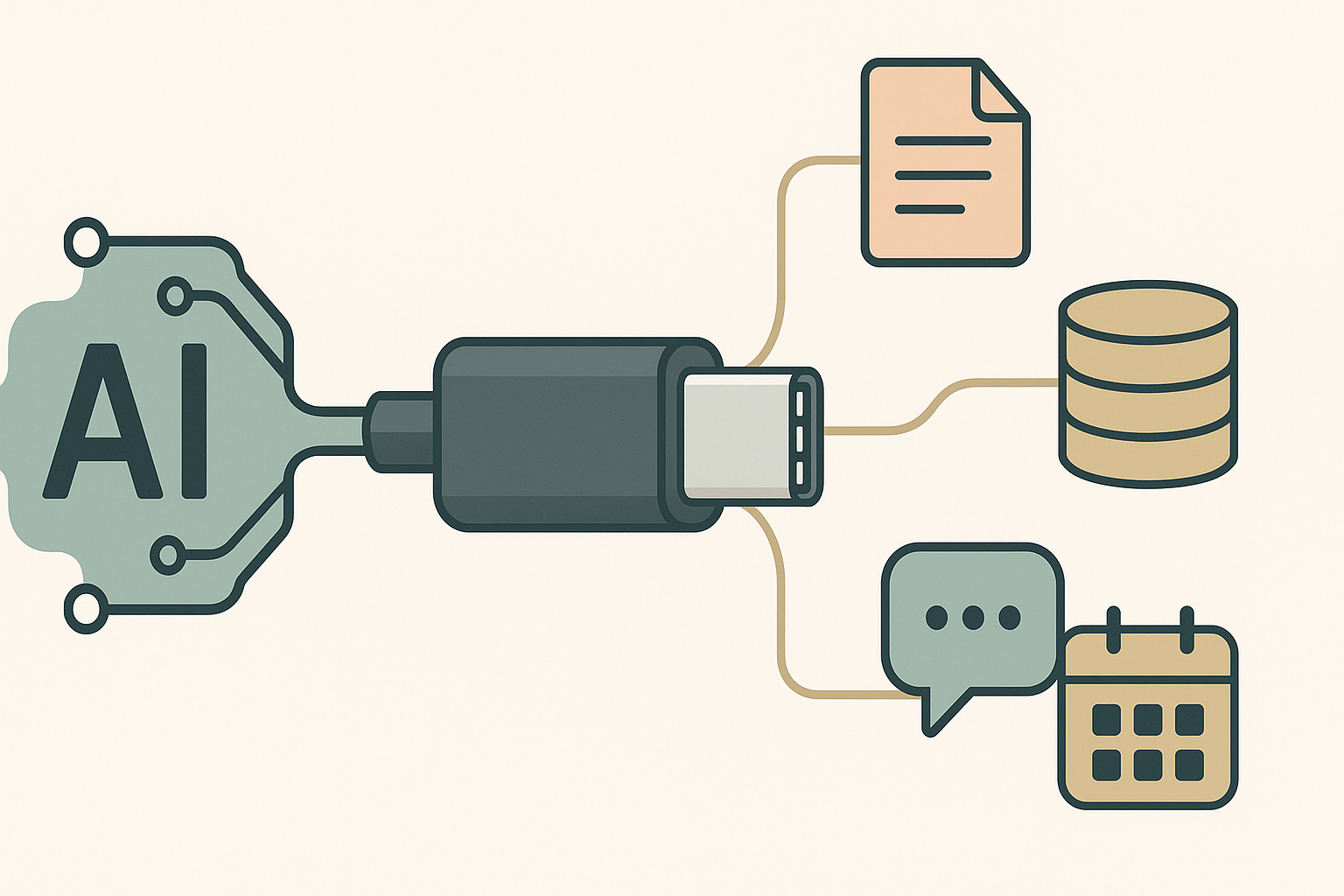
To understand how AI agents operate independently, you first have to look at how they connect to external systems. In late 2024, Anthropic introduced the Model Context Protocol. You can think of MCP as a universal adapter for artificial intelligence—essentially a USB-C port for AI agents.
Before MCP, if you wanted an AI model to read your association's membership database or check a live event registration system, a developer had to write custom code specific to that exact model and that exact database. This meant that every integration was a bespoke project, requiring ongoing maintenance and significant technical overhead. If an API changed, the integration broke. If you switched from one AI provider to another, you often had to rebuild the connection entirely.
MCP standardizes this interaction. It provides one common plug so any AI model can connect to any tool or data source. Once a system is set up as an MCP server, any compatible AI client can interact with it using natural language. The implementation is straightforward. Developers can often expose existing capabilities as MCP services in a matter of hours or days, automatically allowing agents to consume that data without complex custom coding.
But MCP only solves half the equation. It dictates how an agent talks to a tool once the agent knows the tool exists. It does not help the agent figure out what tools are available in the first place. If an agent needs to check the weather, pull a stock price, or query a clinical registry, it needs to know where to look. Until recently, developers had to scour the internet, check code repositories, and manually verify if an MCP tool was legitimate, functional, and safe to use. There was no standardized way to verify the provenance of a tool, meaning an agent could easily connect to a malicious or poorly built service.
This gap led a coalition of major technology companies—including Google, Microsoft, Salesforce, ServiceNow, Snowflake, and Cisco—to publish a new open specification in mid-2024 called Agentic Resource Discovery. If MCP is the USB-C port, ARD is the search engine that tells the agent which port to plug into.
ARD sits one step in front of MCP. It is a draft standard for how AI agents find, choose, and verify the tools and skills they need. Instead of relying on a human developer to hardcode a list of approved tools, an agent can use ARD to discover resources dynamically based on what it is trying to accomplish.
The system relies on two main components. First, organizations publish a catalog. This is a simple file hosted on their own web domain that lists the AI capabilities they offer. Because the catalog lives on the organization's own domain, owning that domain establishes identity and trust. Second, registries act like search engines for the agents. They crawl these catalogs, index them, and return matches when an agent describes its goal in plain language. These registries function much like early web search engines, categorizing capabilities so that when an agent needs to calculate a complex engineering formula, it instantly knows which verified tool to call.
To use a classic analogy, ARD is the phone book and MCP is the act of making the phone call. The phone book tells you who you can call and gives you a sense of what the business does. Once you find the right roofer or plumber in the directory, you pick up the phone and dial. From the moment the call connects to the end of the conversation, you are using a standard protocol to communicate.
This directory structure introduces a layer of reputation and verification that the AI ecosystem desperately needs. Just like consumer review platforms combine business listings with reputation scoring, ARD registries can help agents determine if a tool is published by a legitimate authority or a malicious actor. Once ARD makes the match and verifies the tool, it gets out of the way. The tool is then called through its native protocol, which is often MCP.
While these protocols complement each other, the corporate backing behind them reveals a quiet battle over who controls the center of the AI ecosystem. The list of companies supporting ARD is massive, but there are notable absences. OpenAI and Anthropic—the companies behind ChatGPT and Claude—were not part of the initial ARD coalition.
This division points to a strategic divergence in how technology giants view the future of AI infrastructure. Established software companies want their own applications to remain the primary workspace. If you spend your day in a CRM or a cloud data platform, that software provider wants to be the single front door to all your AI capabilities. They want their systems to easily discover and route tasks to various models and tools in the background.
Conversely, the creators of the frontier models want their chat interfaces to be that front door. They envision a world where users start their day in ChatGPT or Claude, and those models reach out to external systems as needed.
For associations, the outcome of this corporate maneuvering matters less than the underlying capability it creates. The technology is maturing rapidly. Problems that plagued early AI adoption—like the inability to discover tools or verify their safety—are being solved systematically. As these standards take root, AI agents will become increasingly autonomous, capable of stringing together complex workflows by discovering the right tools, verifying their safety, and executing tasks without human intervention.
ARD and MCP present a distinct opportunity for membership organizations. Associations naturally sit at the intersection of consumers and producers within specific professions. You are already the gatekeepers of highly valuable, domain-specific information.
Consider an association that manages a massive clinical registry, a database of industry benchmarks, or a library of proprietary research. Historically, monetizing that data meant selling subscriptions to human users who would log in, run searches, and export reports. With MCP, you can expose that exact same data to AI agents. An association could publish an MCP tool that allows external AI agents to sip aggregated, anonymized data from its registry. The association can charge a micro-transaction fee or require a paid subscription for every query the agent makes.
ARD makes this business model scalable. By listing your MCP tools in an ARD directory, you ensure that AI agents operating in the healthcare, engineering, or legal sectors can actually find your data when they need it to answer a user's prompt.
Beyond publishing data, associations can also play a role in the discovery layer itself. Because ARD relies on registries to index and verify tools, an association could host an industry-specific directory. You could curate a list of AI tools and MCP services that have been vetted for accuracy, privacy, and safety within your specific profession. If you represent civil engineers, your ARD directory could become the definitive source for verified structural analysis tools. This positions your organization as the ultimate arbiter of quality and safety in an otherwise chaotic digital environment. Members would rely on your association's directory to ensure their internal AI agents are only connecting to trustworthy, industry-approved resources.
This model mirrors what associations have done for decades with vendor directories and certification programs. The only difference is that the end user consuming the directory is an AI agent rather than a human procurement officer.
The introduction of Agentic Resource Discovery and Model Context Protocol marks a significant step forward in the reliability and utility of artificial intelligence. We are moving past the era of isolated chatbots and entering a phase where interconnected AI agents can discover resources, verify their safety, and execute complex tasks across multiple platforms.
You do not need to pause your current technology initiatives to implement these protocols today. However, you should factor them into your long-term digital strategy. As you audit your proprietary data and consider how to deliver value to your members in the coming years, think about how that information might be packaged for AI consumption. The organizations that prepare their data for this interconnected ecosystem will be the ones that maintain their authority and relevance as AI agents become the primary way professionals search for and interact with information.
1 min read
Summary: In this episode of the Sidecar Sync, Amith Nagarajan and Mallory Mejias explore one of the most provocative ideas in AI yet: companies...
1 min read
Whether you're an iPhone or Android person, you're probably familiar with Apple's charging woes. For years, users had to buy different types of...
1 min read
Associations are intimately familiar with the concept of vendor lock-in. For decades, technology planning has often meant choosing a single ecosystem...