Most associations were built on a promise that still holds: bring the right people together and good things happen. That idea launched thousands of organizations across every profession, trade, and cause imaginable. It filled conference halls, built certification programs, and created communities that shaped entire industries.
But somewhere along the way, a lot of those organizations settled in. The annual conference runs the same format it did a decade ago. The committee structure hasn't changed. The programming is planned top-down, and member engagement is measured by attendance numbers rather than by whether anyone actually connected with someone they wouldn't have met otherwise.
None of that means associations have lost their purpose. It means many have lost the energy that made them essential in the first place.
Benjamin Rosman, professor of computer science at the University of the Witwatersrand in Johannesburg and one of TIME's 100 Most Influential People in AI for 2025, co-founded exactly that kind of community from scratch — and the way it grew holds lessons for any association willing to rethink how connection actually works.
Start With Demand, Not Infrastructure
In January 2017, eight computer scientists — all South Africans who had studied or worked abroad in AI research — wanted to give something back to their community. The plan was modest: organize a week-long technical deep dive on machine learning, host it at a university in Johannesburg, and see if they could attract maybe 30 people who cared enough to show up.
They ended up with 330 attendees. More than double that had applied.
What struck the organizers wasn't just the demand — it was who was applying. Applications poured in from places they didn't expect, from people doing work that genuinely surprised them. One accepted applicant sent an email that read: thank you so much, this is the greatest thing that's ever happened to me — unfortunately, a ticket to South Africa is five times my father's monthly salary.
That email changed the trajectory of the whole initiative. The organizers scrambled to fundraise, eventually covering flights, accommodation, and meals for 60 students who couldn't have attended otherwise. The event — called Deep Learning Indaba, using a Zulu word for a community gathering — ran for six days. And it made one thing unmistakably clear: the demand for connection and learning was already out there. They gave it somewhere to land.
There's a lesson in that for every association wondering why engagement is flat or why younger professionals aren't showing up. Sometimes the problem isn't that people don't care about your topic. It's that the format you're offering doesn't match the way they want to engage. Before investing in better marketing for the same event, it's worth asking whether the event itself is what people actually want.
The Satellite Model: Let Communities Own Their Experience
After the first Indaba, the organizers faced a scaling question that will feel familiar to any association leader: how do you grow without losing what made the original thing work?
Their first instinct was to host events in other African countries themselves. Then they stopped. As South Africans, what did they actually know about building a community event in Senegal, or Kenya, or the Democratic Republic of Congo? Exporting their format to places they didn't understand felt like exactly the wrong move.
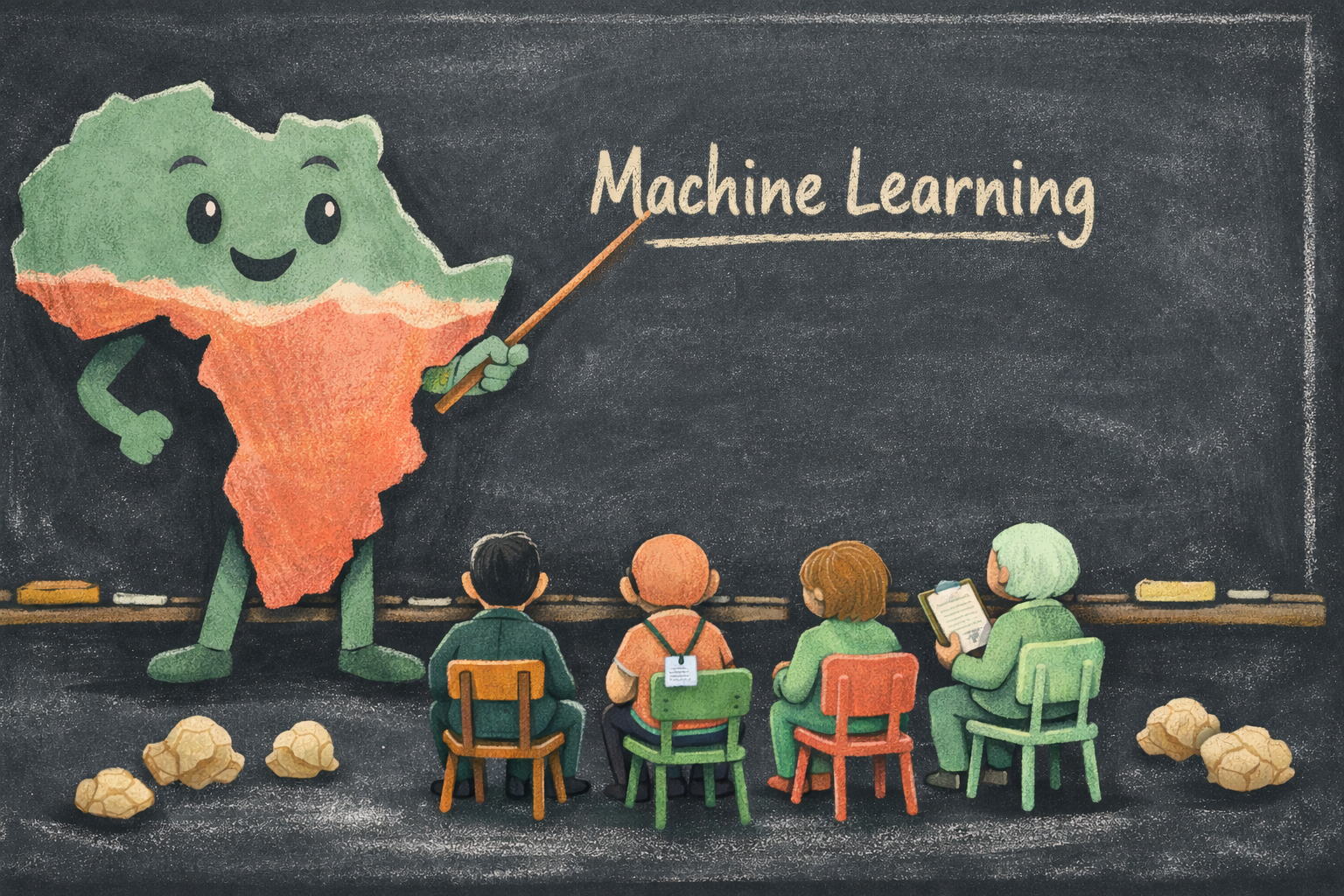
Instead, they built something inspired by the TEDx model. Local organizing teams from any African country could apply to host an Indaba X — a satellite event connected to the main community but shaped entirely by the people running it. The format, length, audience, and focus were up to them. Some ran for one day, others for five. Some drew 30 people, others 500. Some focused on research, others on startups, others on introducing high school students to the field.
The central organization provided funding, help with speakers and promotion, and a shared code of conduct. Beyond that, they stepped back.
Today, there are satellite events running in 47 African countries. Each one reflects the character of its local community — its priorities, its stage of development, its culture. And the model created a natural pipeline: standout organizers and attendees from satellite events earn tickets to the main Indaba, and many go on to join the 80-person volunteer organizing committee that runs the whole thing.
This is worth sitting with if you're part of an association that plans everything from headquarters. The instinct to control quality by controlling the experience is understandable. But it can also be the thing that prevents your community from growing in ways you never would have planned. The most vibrant communities aren't the ones where every event looks the same. They're the ones where local leaders have the freedom to build something that actually resonates with the people in the room.
Reduce the Friction in Idea Flow
Underneath the events, the satellite model, and the growing volunteer base, there's a simpler philosophy driving the whole thing. The modern world is specialized. People spend their careers getting deep in a single area — and that specialization is valuable. But it also means that the person with the technical solution and the person with the real-world problem are often in completely different rooms, different institutions, different countries.
The job of a community isn't to make everyone an expert in everything. It's to reduce the friction between people who have different kinds of expertise so that unexpected combinations can happen. A master's student who also does community outreach and mentors younger students. A startup founder who meets a researcher working on a problem she didn't know had a name. A policy expert who sits next to an engineer and realizes they've been thinking about the same issue from opposite ends.
Before the Indaba existed, most people involved in AI across Africa could count on one hand how many colleagues they knew from other African countries. Now there's a network that spans the entire continent — people who've collaborated on projects, reviewed each other's applications, organized events together, and built relationships across cultures and languages that didn't have a natural meeting point before.
That kind of connection doesn't happen by accident. It happens because someone created the conditions for it — then trusted the community to do the rest.
What This Means for Your Association
The honest question for association leaders isn't whether your organization connects people. Of course it does — that's foundational to what associations are. The question is whether the connections you're facilitating are the ones your members actually need right now, or the ones your organization has always been set up to provide.
There's a difference. And the gap between the two is where a lot of associations lose relevance without realizing it.
The Indaba didn't succeed because it had a perfect format or unlimited resources. It succeeded because it started with genuine demand, gave local communities ownership over their own experience, and focused on creating conditions for serendipity rather than trying to control every outcome.
For associations, that might look like giving chapters or local groups more autonomy to shape events around their own context. It might mean designing conference sessions where people with different specialties are deliberately mixed rather than sorted into the tracks they already know. It might mean building programs that connect members across geographic and cultural boundaries, not just within the usual circles.
The associations that thrive in this moment won't be the ones with the slickest programming or the most polished events. They'll be the ones that remember what made community powerful in the first place: putting the right people in a room together, shaking the box, and trusting that the magic will follow.
February 19, 2026