Summary:
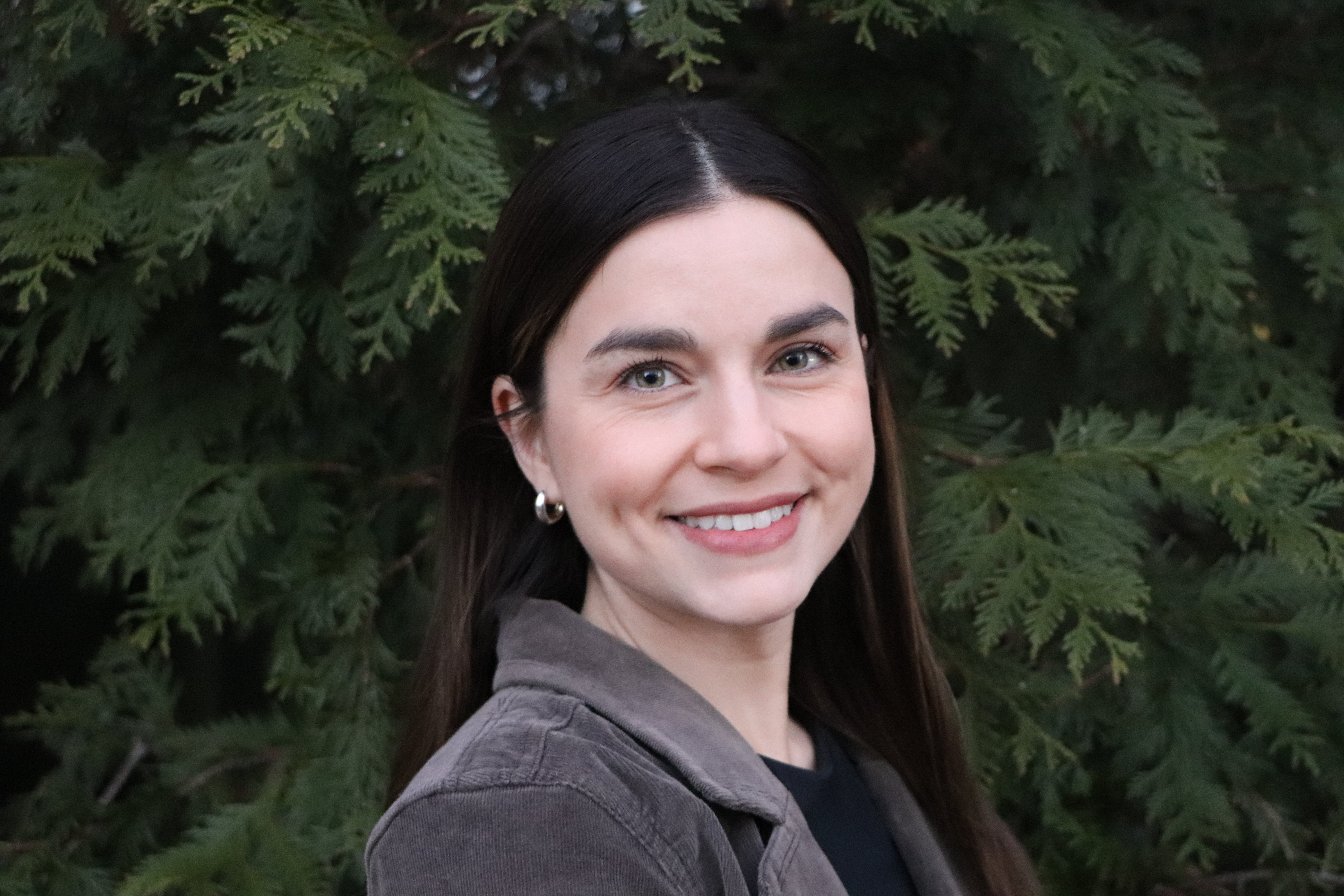
When an association with 85 years of food science knowledge decides to launch an AI product, what happens? In this episode, Mallory Mejias sits down with Jay Gilbert, Director of Scientific Programs and Product Development at the Institute of Food Technologists (IFT), to explore how IFT built CoDeveloper, an AI-powered platform designed to streamline R&D in food innovation. Jay shares how his journey from student member to staff gave him a unique edge in shaping tech that’s both useful and trusted. You’ll hear how IFT gained board buy-in, brought staff along for the ride, and maintained privacy for proprietary food formulas — all while keeping their mission at the center. If you're curious about launching member-focused AI tools, this conversation is packed with practical insights and inspiration.
Jay is the Director of Scientific Programs & Product Development at the Institute of Food Technologists (IFT). A longtime member who joined staff in 2017, he has supported everything from special interest groups to IFT’s annual scientific program. Today, he leads new product development and serves as product lead for CoDeveloper – Powered by IFT, an AI-enabled platform that brings IFT’s 85+ years of science and research directly into the R&D process to accelerate food product development.
https://www.linkedin.com/in/jaytgilbert/
https://www.ift.org/
Timestamps:
00:00 - Introduction to Jay Gilbert & IFT02:07 - Meet Jay: From Student Member to Tech Leader
06:36 - Introducing CoDeveloper: The AI-Powered R&D Tool
10:42 - How Members Are Responding
14:35 - Bringing the Board Along for the AI Ride
21:11 - Keeping Member Data Private
23:39 - Lessons from the CoDeveloper Launch
28:30 - Educating Users & Spreading the Word
32:51 - What’s Next for IFT’s AI Ecosystem
35:47 - Final Advice: Start Small, Learn Constantly
👥Provide comprehensive AI education for your team
https://learn.sidecar.ai/teams
📅 Find out more digitalNow 2026:
https://digitalnow.sidecar.ai/digitalnow2026
🤖 Join the AI Mastermind:
https://sidecar.ai/association-ai-mas...
🔎 Check out Sidecar's AI Learning Hub and get your Association AI Professional (AAiP) certification:
📕 Download ‘Ascend 3rd Edition: Unlocking the Power of AI for Associations’ for FREE
🛠 AI Tools and Resources Mentioned in This Episode:
CoDeveloper ➔ https://codeveloper.ift.org
ChatGPT ➔ https://chat.openai.com
https://www.linkedin.com/company/sidecar-global
https://twitter.com/sidecarglobal
https://www.youtube.com/@SidecarSync
⚙️ Other Resources from Sidecar:
- Sidecar Blog
- Sidecar Community
- digitalNow Conference
- Upcoming Webinars and Events
- Association AI Mastermind Group
More about Your Hosts:
Amith Nagarajan is the Chairman of Blue Cypress 🔗 https://BlueCypress.io, a family of purpose-driven companies and proud practitioners of Conscious Capitalism. The Blue Cypress companies focus on helping associations, non-profits, and other purpose-driven organizations achieve long-term success. Amith is also an active early-stage investor in B2B SaaS companies. He’s had the good fortune of nearly three decades of success as an entrepreneur and enjoys helping others in their journey.
📣 Follow Amith on LinkedIn:
https://linkedin.com/amithnagarajan
Mallory Mejias is passionate about creating opportunities for association professionals to learn, grow, and better serve their members using artificial intelligence. She enjoys blending creativity and innovation to produce fresh, meaningful content for the association space.
📣 Follow Mallory on Linkedin:
https://linkedin.com/mallorymejias
Read the Transcript
🤖 Please note this transcript was generated using (you guessed it) AI, so please excuse any errors 🤖
- [00:00:00:14 - 00:00:09:17]
Amith
Welcome to the Sidecar Sync Podcast, your home for all things innovation, artificial intelligence and associations.
[00:00:11:09 - 00:00:43:00]
Mallory
Hello and welcome to the Sidecar Sync Podcast. My name is Mallory Mejias and I'm one of your hosts along with Amith Nagarajan. And if you are listening to this episode on the day of its release, Happy Thanksgiving to you. And even if you're listening to this episode not on Thanksgiving Day, I've got to say we at Sidecar are so grateful for you all, our community. Thank you for supporting us. Thank you for continuing to tune in and thank you for wanting to learn about innovation and AI as it pertains to the association space.
[00:00:44:03 - 00:01:02:10]
Mallory
So what happens when an association takes its deep well of expertise and turns it into an AI product? Well, on today's episode of the Sidecar Sync, we are joined by Jay Gilbert, director of scientific programs and product development at the Institute of Food Technologists or IFT.
[00:01:03:13 - 00:01:16:12]
Mallory
Jay actually started as a student member of IFT, fell in love with the mission and the community and eventually joined the staff, a perspective that now shapes how he builds technology with and for food scientists.
[00:01:17:13 - 00:01:47:11]
Mallory
Today he leads new product development at IFT and is the product lead behind CoDeveloper, an AI enabled platform that brings 85 years of trusted science and research directly into the R&D process to accelerate food product development. In our conversation, Jay and I get into how IFT transform decades of institutional knowledge into a truly useful AI tool, the behind the scenes process of bringing staff and the board along during AI adoption,
[00:01:48:11 - 00:02:02:23]
Mallory
why associations may be the best positioned organizations to build mission driven technology and Jay's practical advice for leaders ready to innovate, start small, learn continuously and build in partnership with your members.
[00:02:04:01 - 00:02:06:05]
Mallory
Everybody please enjoy this interview with Jay Gilbert.
[00:02:07:11 - 00:02:28:20]
Mallory
Jay, thank you so much for joining us on the Sidecar Sync podcast. It's always fun to have a guest who listens to the podcast regularly. So I'm excited to see all the great work that you have been doing at IFT and especially Co-Developer, which will be the focus of our conversation. Can you share a little bit about yourself and your background with our Sidecar Sync audience?
[00:02:28:20 - 00:04:07:07]
Jay
Yeah, now I'm so glad to be joining you on the podcast, a long time listener, first time caller. I'm excited to share my experience in the AI space, the technology space, but yeah, my background isn't food science. I work at the Institute of Food Technologists as the director of scientific programs and product development. I actually was a member of IFT before I came on staff. I was a student who came up through the student association through competition, local and national leadership. Thought I was going to go work at a large consumer products goods company. We're doing product development in the food and beverage space, but fell in love with the volunteer aspect and the strategy and just the impact and mission driven work of IFT in the association space. So I decided to take the leap of faith and join the dark side and have been on staff with IFT now for eight years, primarily focused on working with our human intelligence is what I'll call it. So working with our volunteers, subject matter experts within our special interest groups, working on content, whether that is webinars, podcasts, overseeing our scientific program at a large ingredient expo and session event that takes place in Chicago. Just got done that a couple of weeks ago, which was exciting. And then recently I've been venturing into new product development for IFT, primarily taking human intelligence and then adding in the artificial intelligence in the technology space since we've started to talk a lot about hybrid intelligence and the impact that that can really have. So it's been fun to dive into that space. And we have just launched our first new product called code developer,
[00:04:07:07 - 00:04:22:11]
Mallory
which I'm so excited to talk about. I've got to say, I don't know that I've heard many examples thus far in my association adjacent career of people who have been members to staff. Is that like common? Do you know a few people like that? Are you one of the few?
[00:04:22:11 - 00:05:03:08]
Jay
Yeah, you know, it's not super common, but I would be a big advocate and champion for it as I've dove into like this product, especially the relationship that you have as a staff member with kind of boots on the ground, understanding the day to day of, you know, what your members are doing just helps to make sure that the products that you're developing and designing are kind of meeting them where they are. And so whether it's a really close relationship that, you know, association professionals are having with their team or bringing on actual members onto the staff to really support that I think is a huge advantage and one that I've kind of grown and been in big advocate for it. I have to.
[00:05:04:12 - 00:05:25:09]
Mallory
That's awesome. I would love to see more of that before we dive into code developer, though, you mentioned Institute of Food technologists, I have tea. I want to hear your little spiel for when you're talking to someone, maybe in your personal life about what you do and they don't know what IFT is because I probably don't have a full grasp and I'm sure some of our listeners don't either. So what is your typical like this is what we do spiel.
[00:05:25:09 - 00:06:35:15]
Jay
Yeah, absolutely. So a lot of people don't even know what food science actually is. So everything that you buy at the grocery store is made or has some impact by a food scientist. So they are the ones that come up with, you know, help come up with the idea, come up with the recipe, figure out how do you make it safely, effectively? How do you package it right so that it has the same quality and shelf life? How do you produce it on a mass scale and actually, you know, market it and sell it to consumers? So you don't actually realize or a lot of people don't how much work goes into that granola bar that you're purchasing at the grocery store. And a food scientist takes all of the different like scientific disciplines and actually apply it to food in order to deliver the product that you're eating. And so we are a professional association that supports those that are working in the science of food, whether that is working at large consumer products, good companies, startups that are launching a new product, or those that may be working at ingredient companies or even academia as well. We have a lot of members who are doing research within within academia on ingredient functionality, health trends, those types of things.
[00:06:36:18 - 00:07:01:06]
Mallory
That's a really good spiel. I know you would have one. I'm still working on mine when I tell people what I do at Sidecar and on the podcast and AI education for associations, you kind of see this glazed overlook. So hopefully, hopefully I can tailor my explanation a bit more like yours. Jay, I want you to tell us about this recent launch co-developer in simple terms. What is it? What does it do? And what problem are you trying to solve with your members?
[00:07:01:06 - 00:09:11:16]
Jay
Yeah, absolutely. So I'll start with the main problem that we're looking to solve. And so with a lot of associations, we know that people come to us to help solve problems that they're facing on their day to day, staying informed of the latest and greatest trends that are there. And so we have really embraced those jobs that people are coming to us and hiring us to do. And we are looking at how can technology, especially artificial intelligence, help us deliver that value to our community in more effective ways. And so co-developer is really our ability to really take IFE value and deliver it to our largest customer, which is those working with industry and those working within product development. So co-developer itself is an artificial intelligence enabled platform that really supports the early stages of the product development process. It has a suite of tools and technologies that really help to kind of embed science into the R&D process to really help support somebody who is coming up with an idea on a new food product that they may be tasked with creating or that they may have themselves going through to come up with their first recipe. And a lot of what product developers do are they are trial and erroring the recipe itself. And sometimes they may come up with a recipe five, 10, 50, 100 different times. And really what's core for them to do that and do that well is a scientific understanding of the components that they're bringing together, how they're coming together and ultimately how to make that final product. And what IFT has is a wealth of knowledge and information that has been published over the course of nearly 85 years in order to really kind of help the community communicate about the science that they're working on and essentially being a platform for that content to be shared. And so we are leveraging AI and retrieval augmented generation system in order to deliver that value to really support accelerating the R&D process.
[00:09:11:16 - 00:09:23:20]
Mallory
That is incredible. What did the process look like before co-developer? I know it's quite new, but did it involve food technologists having to kind of sift through old publications and figure out like which were relevant?
[00:09:24:23 - 00:10:40:06]
Jay
Yeah, exactly. And so your typical research capabilities, people would come to IFT, look through our journals, look on our website to try to find content. And a lot of that is either looking through and spending a lot of time on Google or going down the hall to talk to an expert who's been at your company for 10, 20, 30 years sometimes. And within the food space that we're in, that's becoming rarer and rarer for there to be a truly tenured colleague that you can go to to act as a mentor. Our community is really being tasked with doing a lot more with what? And so that institutional knowledge is becoming rarer. And so IFT, we have a lot of that institutional knowledge within our content, within our community, within our publications. And so that is really an opportunity space for us to say, how can we address that problem where especially those that are coming out of university, early careerists, are needing access to trusted content and information? And so co-developer is really our way to address that problem as well, not only accelerating product development, but getting access to trusted information that they may not be getting within their own institution.
[00:10:41:11 - 00:10:41:19]
Mallory
Wow.
[00:10:42:22 - 00:10:49:03]
Mallory
It sounds perfect. It sounds perfect on paper. What has the general reception been from your members thus far?
[00:10:49:03 - 00:11:53:04]
Jay
Yeah, so the kind of the mission driven approach to technology development has been fascinating. Not many people we've talked to have expected IFT to be coming into this space to be launching a software as a service product. It's kind of been very non-traditional for them to hear, but it's provided an opportunity for us to really help to essentially to voice our role in this process, which is not only to deliver our value, but to ensure that as this transformative wave comes in of artificial intelligence and how it's going to be such a huge impact on everyone's work, that we're bringing the community along on the journey with us. We are not here to nickel and dime everyone and make extraordinary profits. We are here in order to ensure that the community is getting the resources, the technology and the education they need to accelerate in the work that they do. That is really where my mantra has now become AI is not going to take your job, but somebody with AI will.
[00:11:54:05 - 00:12:09:03]
Jay
As a mission driven organization, it's really incumbent on us to make sure that we're taking everyone along on that journey with us, which brings a level of trust that has been really kind of well-received and voiced by the community as they've heard more about the CODA Developer product.
[00:12:09:03 - 00:13:04:22]
Mallory
Mm-hmm. I feel like that's so inspiring for our audience because really, in theory, any startup could have attempted to do what you all have done, but they wouldn't have the brand, they wouldn't have the trust, and they wouldn't have the 85-ish years of research that you all have. You are just perfectly positioned to serve your membership, of course, not nickel and dime people, but capitalize on that. Going back to what you said earlier, deliver value. I love what you're saying about mission driven tech and kind of how associations are just perfectly sitting in this position to leverage AI in that way. Did you find your members, they are food technologists, I would assume they're pretty tech savvy, did you find that most of them were pretty up to speed with generative AI as a whole, were knowledgeable about its capabilities, or was there kind of an education curve to say, "Here's what this can do for you"?
[00:13:04:22 - 00:14:33:15]
Jay
There continues to be an education curve, but it is getting to the point where people have now heard or begun to experiment with CatGBT and those aspects. A lot of organizations are implementing policies around use of AI. The privacy and security piece has been probably the most common question that we do get in regards to the technology that we're building and the platform that we're delivering. This year, a lot of our community has been tasked with figuring out what they're going to do with AI. What is out there? How are we going to embrace this? People have realized that it's not just a fad that is going to be something that's going to go to the wayside and it is something that is going to be transformative in the work that they're doing, but it's a matter of doing it responsibly. That has really been a very big opportunity space for us and being really well received is that being mission driven, we can lean into that story, lean into IFT's mission, which is to advance the science of food and its application and actually calling out the words in our mission to say we're designing and delivering an application to advance the science of food. That has really helped to articulate why we're in this space. It's also helped with our board as well to have them come along in the journey and to really support this product because we view this as truly living out our mission based off of the words that are outlined.
[00:14:35:10 - 00:15:08:00]
Mallory
Well, you mentioned board, which I think we've got to discuss here. We launched the Side Cursing Podcast, I believe toward the end of 2023. At that time, I couldn't have imagined having a conversation like this because I feel like in general, you all have moved quite quickly from 2023-ish when we saw this generative AI boom to now, which is almost like July. Starting of August 2025, you all moved pretty quickly on this. Can you talk about that timeline and then also what it was like getting your board bought in?
[00:15:09:03 - 00:15:24:16]
Jay
Yeah. The initial portions of this project started in 2020, which is the fundamental research of understanding the jobs to be done framework. Why do people come to IFT? What are the problems that we're looking to solve?
[00:15:25:17 - 00:15:48:06]
Jay
This project has truly been ground in solid research of what problem are we solving? Why are we going about doing this? That is the start of it. Then it's progressed to the point where we did come to our board and we've started to narrow that funnel down with what we're looking to create.
[00:15:49:09 - 00:16:40:07]
Jay
In 2023, it was really the start of that seed funding request. Our board has really treated this as a startup mentality where they are our funders and we are coming to them in order to seek funding to have the deliverables be outlined, which has been a very fascinating component. What has been most unique about it was that they were learning about generative AI along with us. That aspect of they are experts within our sector and not within AI. It really was a partnership that we built around learning about it and teaching them and bringing them along on this journey. That was critical. We implemented office hours going into board meetings where we could really dive into the tactical pieces of this technology to help them learn so that when we get to the board meeting, it is all about strategy.
[00:16:41:12 - 00:17:03:13]
Jay
It really was a lot more working with the board in order to make sure that everyone is feeling comfortable around the discussions that are happening, the decisions that are being made. It actually made the strategy conversations go much more smoothly by having a lot of the tactical discussions and learnings take place ahead of time.
[00:17:05:11 - 00:17:20:08]
Jay
I would highly recommend that to anyone who is going to the board, especially if there are learnings that need to be happening beforehand. Keeping up the tactics and the learning compared to the board discussions, which are strategic, has been the biggest learning for me.
[00:17:21:13 - 00:17:44:18]
Mallory
I love that. I love, too, what you said about how this really goes back to 2020. It's something we talk about on the podcast a lot, particularly a myth around building with the future in mind. Perhaps in 2020, you were doing this groundwork. You were looking at the research. You laid this foundation. We're very clear on your vision. That allowed you to capitalize on this generative AI boom that we saw just a few years after that. Would you agree?
[00:17:44:18 - 00:17:52:16]
Jay
Yeah, I would totally agree. My passion back then was our taxonomy. How do we organize our content effectively?
[00:17:53:19 - 00:18:37:04]
Jay
We're going in this super structured approach to it. Then generative AI came around. It's like, "Oh, wait. We don't need to be as structured as it used to be." We were actually drawing inspiration from medical records and how that was structured in order for us to be delivering our content more effectively. It was just the convergence of the technology with the research that we had that allowed us to move as quickly as we did. Setting a solid foundation for the research that you have and then looking to technology not to be the solution, but to support and to amplify is really the way that we were punched in.
[00:18:38:17 - 00:19:09:19]
Mallory
You mentioned working with the board on education and teaching them about the generative AI, the tactics you said, and the strategy behind it. I'm curious what your experience has been internally with staff around generative AI. Again, just in my mind, I would think, Institute of Food Technologists, I would think, "Oh, the staff's probably pretty innovative and futurist." I don't know if you would agree with that statement, but what was it like to get staff internally on board with co-developer? Was it easy? Did you have any obstacles?
[00:19:10:24 - 00:19:33:13]
Jay
Yeah. I mean, we're continuing to go through exactly how co-developer does become an organization-wide strategy as well. Not only did we treat it as a startup with our board, but we also treated it as a startup within IFT as well. We've designed a lot of the fundamental technologies in order to support other product opportunities.
[00:19:35:05 - 00:20:16:03]
Jay
As an example, we have a generative AI chatbot that we call Sue, which is essentially like a sous chef, really meant to support and articulate that this is meant to work with you, not for you. We've designed that chatbot really in order to help connect product developers to content, but we've designed it so that other chatbots could also be designed and launched in a more seamless fashion. Now that we have co-developer launched, now it becomes an opportunity for us to take a step back and really design our multi-product innovation pipeline that allows us to bring the team along on that journey.
[00:20:17:23 - 00:20:18:09]
Mallory
So awesome.
[00:20:19:10 - 00:20:40:07]
Mallory
I imagine some food technologists might need to be secretive about formulas they're developing. I don't know if that's the case, but are you finding any pushback on getting food technologists working with co-developer given that perhaps a formula needs to be secretive or private? What does that look like?
[00:20:40:07 - 00:21:55:19]
Jay
Yeah. And so we have designed that with privacy and security at the forefront because of that piece. We're working, our customers are people who are working on the Coca-Cola recipe as an example. So the secrecy around this is paramount because you're not patenting a recipe. It is all about trade secrets and how you about going about doing it, which is the fascinating part. And so we have made sure to come out of the gate that we are not training on any question that has asked within the system, any data that has added to create a formula or any formula that is created as well so that a person can come in and use the system with ease of mind, knowing that none of that information is going to be used for any type of insight gathering or training purposes. We even heard through our research that back in the day, people used to be told to go home to Google things because they didn't want a question tied to an IP address just to give the level of competition and secrecy our sector has. And so this is really where we just came out of the gate, knowing that that was going to be a challenge and we've designed the system to be supporting that.
[00:21:56:20 - 00:22:32:11]
Jay
It is fascinating though because as an association, we also don't need to inherently be looking at and finding and gathering trends from the questions that are asked or the information that is there because we have our community who is participating in our call for proposals, adding us with insights around trends and other information that we would have that is allowing us to still gather information into that space. So it allows us to also be able to execute on that strategy of keeping it private and secure.
[00:22:33:22 - 00:22:46:04]
Mallory
Wow. Not even Googling something at the office. See these are things I wouldn't have known our audience, I'm sure wouldn't have known. That's really neat. It makes sense that you all built co-developer with that at the forefront.
[00:22:47:09 - 00:22:57:23]
Mallory
Looking back, I guess how long did this take? You said started in 2023. What would you say was the full timeline from like idea inception to launch, which was just recently?
[00:22:57:23 - 00:23:06:03]
Jay
Yeah, five years, I would say. Okay. But really from when we've gotten our first wireframes together, 18 months.
[00:23:06:03 - 00:23:07:05]
Mallory
Okay.
[00:23:08:10 - 00:23:22:22]
Mallory
18 months. And looking back now that you've done it all and you're on the other side and you've had this successful great launch, what do you feel like are your lessons learned that you would want to share with our association listeners?
[00:23:24:11 - 00:23:25:23]
Jay
Staying intimately involved.
[00:23:26:23 - 00:23:34:09]
Jay
So me and our team, we are joining the morning scrum meeting every day, your daily standups
[00:23:35:10 - 00:23:51:10]
Jay
and really engaging in developing an effective partnership with our development team to really be able to address technical problems, provide that technical insight into how a user is ultimately using the system.
[00:23:52:10 - 00:25:16:08]
Jay
We have come out of the gate with a platform that has multiple tools, technologies, and the way that Sue operates, it's a lot of detail in the backend through system prompts and those types of things that really get to the depth and breadth of what our community expects within our response. Because these are scientists ultimately. So you can't just like take chat GPT and the GPT model, slap it and connect it to a warehouse and call it a day. It really is the devil is in the details and understanding like how is somebody expecting and our response to come back. And then we have done a lot of that comp engineering, if you will, on the backend in order to ensure that it is operating effectively. And so that's really the biggest learning as I take a step back to say, I'm glad we were as involved as we are. And we continue to be because you can come out of the gate. And then there are so many misses when it gets to the detail that your users may not feel the quality is there. So the closer relationships you can build with either your development team or ensure that you're keeping either members involved or people who are actually using the system involved every step of the way has been critical for us to be able to stay on time, stay on budget and be able to deliver a product that actually meets the expectations of our community.
[00:25:17:21 - 00:25:52:00]
Mallory
Something we hear a lot from our audience really across Sidecar is that they want to roll out something like this to their members, but they don't want to roll out anything unless it is fully baked and works very well. I imagine that was pretty essential for you all as the Institute of Food Technologists, right? That you didn't have something that was 90% of the way there, but you also moved very quickly. So can you kind of talk about that balance between maintaining speed and getting this out there to the market quite fast, but also making sure that it was exactly where you needed it to be?
[00:25:52:00 - 00:27:13:08]
Jay
Yeah, well, I think a lot of this is about transparency. I think a lot of people when they do expect big tech, big money, those aspects, there is a level of perfection that comes along with it as well. So we're just now coming out of beta. So while we've done our public marketing launch, our sales cycle is relatively long. And so we're wrapping up those details and kind of moving forward. But being honest with our community around what we're designing, what we're developing, what the expectations are, building that partnership with your customer base around knowing that, let us know. We are with you. One of our taglines is built by food scientists for food scientists. I like that. So we really want to build a relationship with our customer base so that it's not just, here's the product, it's going to be perfect, go for it. And instead, we're in there with them, hypothetically, and being able to kind of support them in the questions that they have or those aspects. So I do think there's a level of relationship with our customers that we're going to continue to build out in order to help us be more relatable and then also ensure that we're keeping an ear to the ground for when there may be tweaks and things like that. But in the software space, nothing's ever perfect. And there's always that next big thing.
[00:27:13:08 - 00:27:38:05]
Mallory
That is true. That is true. And when you say you're with them, theoretically, as they use co-developer, what practically has been your process for educating people on what this does? Are you hosting webinars? I'm assuming you're talking about this at your in-person events. How are you really trying to communicate broadly to your membership and outside of your membership? This is what this does, and this is what it can do for you.
[00:27:38:05 - 00:29:35:07]
Jay
Yeah. And so from a user standpoint, we're setting up coffee chats with a lot of our users, Informal Weekly Touchpoints, where understanding, gathering feedback and data, how's this working? How's this not? What feedback would you like to provide to us? Then from a content standpoint, a lot of content marketing. And so leveraging IFTs channels of webinars, our Food Technology magazine, those types of things to really help to ensure that we're living out what we say, which is we need to take our community along in this journey. So there is a level of us being transparent about the technology that we've designed, where a lot of competitors, they're trying to keep things hush, hush. We're not saying that we're not trying to be competitive in that space, but we have a mission that we need to bring people along on this journey, and we need to educate about the technology, how it operates, and those aspects. And so yeah, we're spinning up webinars, partnering with our publications team as well, and so on. And then AI is going to continue to be one of the major topics in the year ahead. That was the main theme at our event IFT first this past July, which is all about food improved by research science and technology. So the technology piece, that AI piece was front and center. And so that is another kind of unique part about association is that we can leverage the entire ecosystem that we have available to us in order to educate, but also promote. Content marketing is such a good opportunity for us to be able to put our products out there and to put it in front of our users. And that's really where not only we call it co-developer, but it's co-developer powered by IFT. It can really help to embrace that. IFT is the engine that is supporting this.
[00:29:36:11 - 00:30:28:02]
Jay
And one of the things that we've really gotten well, or has been really well received is this collaborative nature. Co-developer naming the platform, Sue, as your extension, your co-scientist, and really helped to make it inviting and welcoming. And we've recently just designed a little icon, like a persona for Sue. That's a very cute penguin. But it's really meant to really try to make a very welcoming environment when somebody may be very high stress in regards to the technology and how it can support. We do want to make this be as warm and welcoming as possible, because at the end of the day, associations are in the feelings business. It's all about how people feel about us and how we make them feel. And technology is no different.
[00:30:30:07 - 00:30:58:07]
Mallory
And that'll just become more and more important, that human connection piece and how you bring folks together. I love the idea, honestly, of the little penguin. Amitha and I are really big too on like, I don't know what the right word for this is, but kind of cute little avatars are just things that infuse more fun, more warmth, more humor into what can seem a bit dry sometimes, or very stern, business technology, AI. So I really like the penguin. Where did that come from? I've got to ask.
[00:30:58:07 - 00:31:57:08]
Jay
Yeah. So it was just talking with our marketing partner around, trying to blend a little bit of that element. We have a lot of empty space sometimes when you first come into the platform, you haven't started a chat yet, you haven't made projects yet, you may be searching something that may not be within a different part or a different feature. And so we need to create something for this empty space and like, oh, let's like do a little bit of a, put a little avatar that's there. And ultimately it started to grow some legs and people started to enjoy it. And then, it was one of those that, oh yeah, this actually could become a much larger strategy for the product. And we got good reception from users who really enjoyed it. So it wasn't a kind of high level, like overall, like this is what we want to go. It was more of a filling the space. And sometimes those things can organically grow into something that you're like, all right, let's keep it going and see where it heads.
[00:31:57:08 - 00:31:58:02]
Mallory
For sure.
[00:31:59:02 - 00:32:11:04]
Mallory
Can you share with us if you're able about the product roadmap for co-developer for Sue, kind of what's next on the agenda, or maybe if there's like a new product you're thinking of launching, I'd love to hear about it.
[00:32:11:04 - 00:34:53:02]
Jay
Yeah, absolutely. And so just from a product standpoint, a lot of what we are exploring is focused really on the content and data side. So as an association, IFT has a lot of proprietary content within our journals and publications, but we're also looking to see, well, what other publicly available data from government sources, USDA, FDA, that we would want to pull into our environment in order to really help to enhance the user experience so that it does become a more encompassing platform so that they don't have to go to multiple platforms for that information. But it becomes an opportunity for us to advance the product to be a much more kind of ecosystem focused opportunity for IFT. For us, we have our big ingredient expo. The biggest question we get when we are demoing the co-developer product is, can I find suppliers? So suppliers are those that are supplying ingredients. And yeah, whether it's a standard ingredient that you may purchase at the store or this novel new protein or functionality ingredient, something like that. And so that's actually one of the primary events or primary uses of our event is to showcase new ingredients at the ingredient expo that we have. And so for us, it really is about how do we take this platform and leverage it to also build in and pull in an IFT ecosystem of value. And so that's really where we're kind of starting to head down is we have the research from users saying this is a pain point. I have to go to multiple places to find where to source my ingredients from. We have the relationships that we can leverage in order to bring that in. So that is kind of on our roadmap from an expansion standpoint. Our board has been very, very intentional about what is our right to win in this space. And so that's really where it's been kind of ingrained in my mind to really ensure that when we are building a feature or looking at building out our roadmap, what is our right to win in this space and ensuring that the moat that we're building is going to be unique to us and how can we ensure that we're expanding that moat. And so that's really where it's become more of an ecosystem strategy to leverage what is unique to IFT that only we can deliver on. And that's really where we're kind of having our roadmap to be guide us through.
[00:34:54:13 - 00:35:03:08]
Mallory
I love that. As I go through the episodes, I'm always thinking of potential titles and I think right to win. Incorporating that in some way would be a really good one for this episode, Jay.
[00:35:04:14 - 00:35:43:01]
Mallory
I know you're an avid listener of the SideCursing podcast, which we truly appreciate. And you did give some advice earlier, which was a stay involved in the process, which I think is excellent advice. But is there anything else as a listener of the pod that you want to share with our audience? I know for sure that we have some incredible association leaders listening right now who have been probably toying with something like what you're saying for their association. They feel like they have the right to win certain areas. They want to better serve their members. Maybe they feel stuck. Maybe they feel scared. Maybe their board is not quite as innovative as yours. What do you want to tell them? You've got the stage.
[00:35:43:01 - 00:36:40:23]
Jay
Yeah, start small. Start small and begin learning. Our biggest asset and within the startup space, learning is your biggest currency. And so the biggest opportunity you have is dive in, start learning yourself, encourage your staff to be learning as well, and make it more of a community learning opportunity. Two, don't shy away from having informal coffee chat or just setting up informal meetings to learn together as well. That's the biggest opportunity just internally that you can do. But also partner with your members. I think that is a huge asset to really understand how are they using it and then learn from them through channels that whether it's surveys or discussions that you may want to create. The biggest opportunity you have is to just learn how they're using it and then ultimately tying that back to what you all are doing. So start small and continue the learning.
[00:36:40:23 - 00:36:49:18]
Mallory
I love it. I'll continue to learn, partner with your members. Where can everybody keep up with co-developer, IFT in general with you?
[00:36:49:18 - 00:37:02:03]
Jay
Yeah, I'm on LinkedIn. So Jay Gilbert there and then codeveloper.ift.org is our URL and you can find us there. So reach out on social.
[00:37:02:03 - 00:37:06:10]
Mallory
Sounds good. Thank you so much for joining us on the Sidecar Sync.
[00:37:07:11 - 00:37:26:17]
Amith
Thank you, Mallory. Thanks for tuning into the Sidecar Sync podcast. If you want to dive deeper into anything mentioned in this episode, please check out the links in our show notes. And if you're looking for more in-depth AI education for you, your entire team, or your members, head to sidecar.ai.
December 1, 2025